

Nestle Arndell Park is a Nestle facility located in the Arndell Park area. It serves as a key hub for the production, packaging, and distribution of Nestle's diverse portfolio of food and beverage products. The facility is likely to adhere to high standards of quality and safety in line with Nestle's global practices.
The production process of an infeed and outfeed automatic warehouse system for pallets, utilizing LGV (Laser-Guided Vehicles) and roller conveyors, typically involves several key steps. Below is a general overview of the process:
Receiving and Unloading:Pallets carrying goods arrive at the facility on trucks. The trucks are directed to specific unloading bays where the pallets are unloaded.
Inspection and Data Capture:Pallets are inspected for quality and accuracy. Data related to each pallet, such as product type, quantity, and destination, is captured and recorded in the system.
Conveyor System Integration:Pallets are placed on the infeed conveyor system. The infeed conveyor system may include sensors for detecting pallets, ensuring proper spacing, and facilitating the smooth flow of pallets onto the conveyor.
Automated Guided Vehicles (LGV) Handling:LGVs, which are equipped with guidance systems such as lasers or magnets, navigate through the facility autonomously. LGVs pick up pallets from the infeed conveyor system and transport them to designated storage locations within the warehouse.
Storage in Automated Racking System:The warehouse is equipped with an automated racking system where LGVs deposit the pallets.The racking system is designed to optimize storage space and facilitate efficient retrieval.
Inventory Management:The warehouse management system (WMS) keeps track of the inventory, including the location of each pallet within the automated storage system.
Order Processing:When an order is received, the WMS identifies the location of the required pallets. The LGVs retrieve the pallets from their storage locations and transport them to the outfeed area.
Outfeed Conveyor System:The outfeed conveyor system receives pallets from the storage area and transports them toward the loading bays.
Loading onto Trucks:Pallets are loaded onto trucks at the designated loading bays.
Data Logging and Reporting:Throughout the process, data is logged and recorded for traceability and reporting purposes.Any discrepancies or issues in the process are flagged for corrective action.
Maintenance and Monitoring:Regular maintenance is conducted on the conveyor systems, LGVs, and other components to ensure smooth operation.Real-time monitoring systems are in place to detect and address any faults or malfunctions promptly.
Industry 4.0 Integration: Incorporate automation and data analytics for improved efficiency.
Remote Monitoring: Implement systems for remote monitoring and control of the production process.
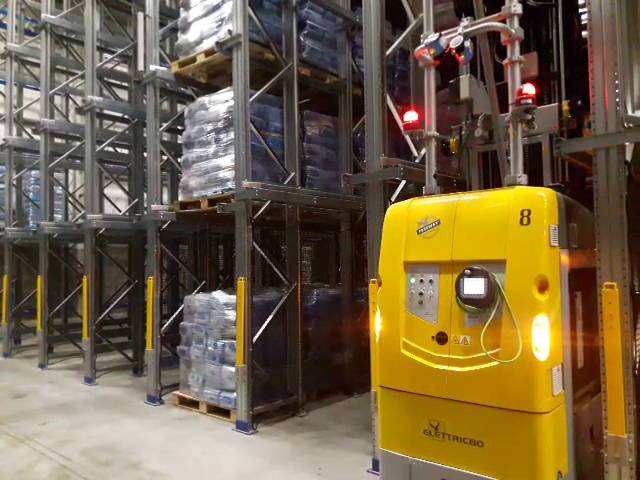
Automatic product entry system to the warehouse: The entry and exit system of the automated warehouse was designed to handle products without pallets and with pallets. For products without a pallet, the system inserted a pallet under it before proceeding with wrapping. After wrapping, a shape check was carried out to verify that the product was suitable for storage. Additionally, a barcode control system was used to enter the product into the management system.
If the check was successful, the pallet was transported from the warehouse loading bays, where an LGV (remotely guided vehicle) took it to its final allocation. For products with double pallets on top of each other, the system included a depalletizing system that separated the double pallets before proceeding with the shape and label control. After checking, the pallet was transported to the warehouse loading docks, where the LGV took it to its final allocation. If the checks were not successful, the pallet was transported to a reject bay and a message was shown on a display.
The system was designed to be easily usable and customizable, thanks to the use of an HMI (human-machine interface) programmed in Factory Talk. This allowed operators to easily manage the system and adapt it to the specific needs of the warehouse.
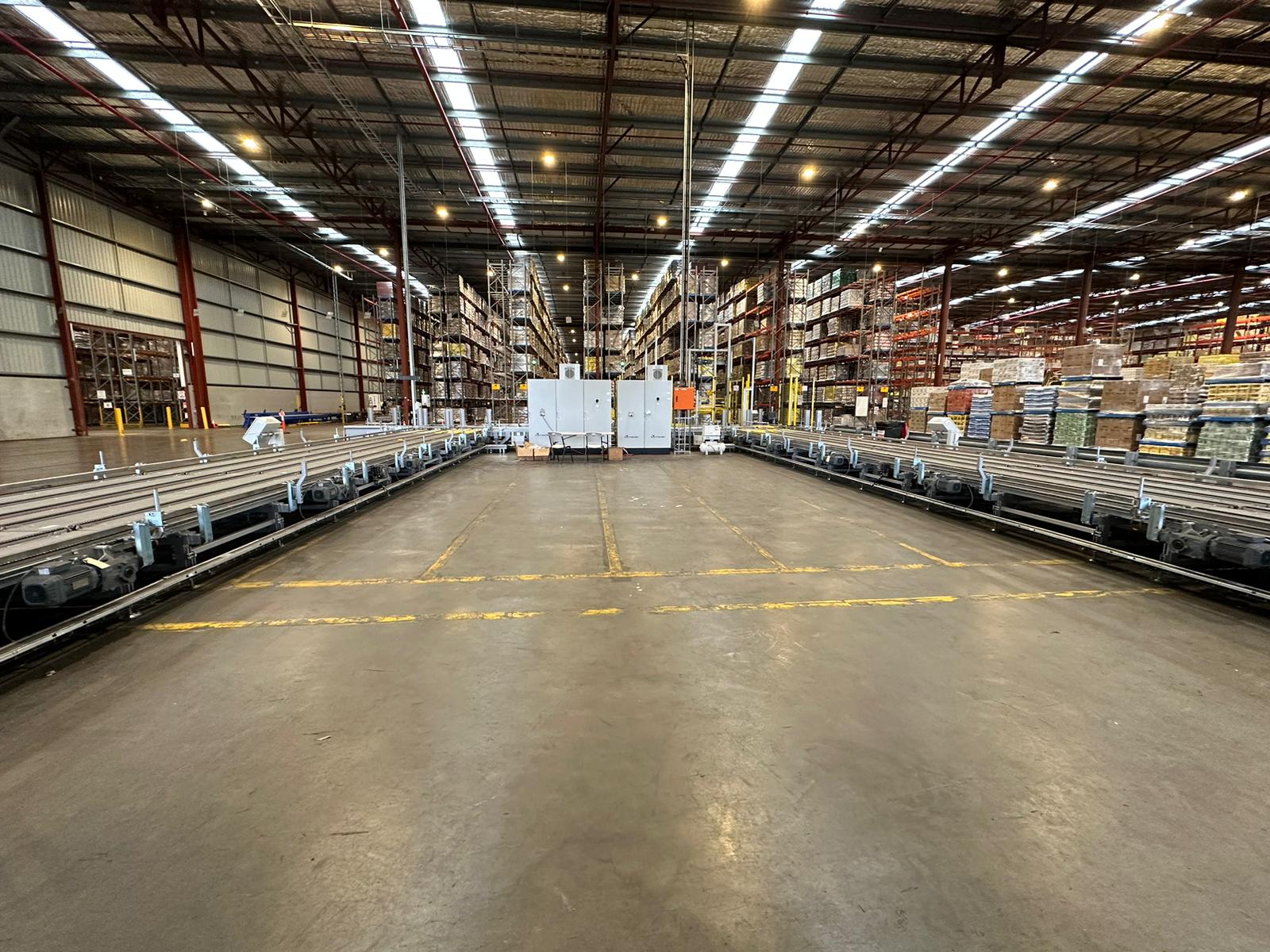
In conclusion, the automatic warehouse entry and exit system has proven to be an excellent solution for managing products without pallets and with pallets. Thanks to the shape and barcode control system, the system is able to guarantee that the products are suitable for storage, minimizing the risk of errors or damage. Additionally, using an HMI programmed in Factory Talk made the system easy to use and customize, allowing operators to easily manage the system and adapt it to specific warehouse needs. All this has contributed to making the system an excellent option for managing automated warehouses.